- A Tuesday · 07:52. A thousand small conversations. Every one of them lands on you.
- What comes out. One stream. Five things back. Your real screens, rendered from the same material.
- 01MaterialsBuilt from your pages, published into your LMS
- 02ConversationsEvery question answered from your material, any hour
- 03FeedbackMarked to your rubric — drafted, then yours to overrule
- 04AnalyticsWho wobbled, on which step, and what to reteach
- 05OutputsQuizzes, flashcards, worked examples, audio — each one a signal
Sign in — two doors, one platform.
No account yet?

Bring what you teach.
LearnLab takes your materials and does the rest.
From syllabus to marked analytics.
Grade Distribution
Correct & Partial
Cumulative (Pareto)
Avg Score per Section
Submission Clock
Peak: 12–1pmFrom syllabus to digital hand outs, chatbots, podcasts.
An educator and student-first platform — purpose-built for STEM.
831,216 graded answers, and what they taught us.
Real product screenshots, the three-year Instituto Superior Técnico case study, and what the cohort actually said.
Takes 20 seconds · No sales call required
Q3 · Show that entropy rises when a gas expands freely into a vacuum.
Anonymous student surveys · 242 responses · 2025–2026
- 01 · Your material. Slides, problem sets, scanned notes. Drop in what you already teach. Nothing to rewrite.
- 02 · Structured. Every page becomes modules, questions and mark bands. In your words. Editable before anyone sees it.
- 03 · Every student. Thirty-one students, thirty-one conversations. A tutor that answers from your material — at 11pm, in their language.
- 04 · Back to you. Marked, charted, on your desk in real-time. Who wobbled, on which step, and what to reteach. Your marking time: 0 min.
Five steps, and a loop that learns each student.
Upload your material
A PDF, a syllabus, a set of slides.
Course and assessment built
Structured into modules, with questions written against them.
Students read, ask, answer
They work through the material, ask the tutor, and sit the assessment.
Marked, with feedback
Every answer graded against your rubric, with a reason attached.
You see who is stuck
Per-student and per-topic, while there is still time to act.
What each student understands
What they read, what they asked the tutor, and how they answered — read together as a picture of where each student actually is.
The tutor adapts to them
That picture drives the next explanation, the next hint, and the next question. A student who has not got it does not get the same answer twice.
You can review and override at steps 03 and 04 — nothing reaches a student without you.
Two things eat your week. Neither has to.
Marked before you get home
Every answer checked against your rubric the moment it's submitted — with feedback the student can act on.
- Marked against your criteria
- You amend any mark in a click
- Students see where the marks went
831,216 answers graded so far
A plant is kept in the dark for 48 hours, then a leaf is tested for starch. Explain the result, and describe how to make it a fair test.
The test is negative because the plant used up its starch in the dark. With no light it can't photosynthesise so it can't make more. To be fair I'd use another plant left in the light as a control.
- 1 mark: Starch already in the leaf is used up while it is kept in the dark
- 2 marks: Links no light → no photosynthesis → no new starch made
- 2 marks: A control that differs only in light (e.g. foil over half the leaf)
Confidence: 91%
Clear explanation of destarching. For full marks, keep the control identical — same plant, same time — with only the light changed.
Answered while you sleep
A tutor that answers from your material at 11pm, in the student's own language — and tells you what they asked.
- Cites your notes, not the open internet
- Replies in the student's language
- Every conversation visible to you
Method
First, destarch the plant by leaving it in the dark for 48 hours. This uses up the starch already stored in its leaves.
Expose the plant to light for several hours, covering part of one leaf with foil.
Boil the leaf, soften it in ethanol, then add iodine solution.
You set the standard
Marking follows your rubric, not ours.
You keep the final say
Any grade can be changed in a click.
You stay the teacher
LearnLab takes the repetition, never the judgement.
It works inside the LMS you already run.
LearnLab is fully integrated with Moodle, and connects to Canvas, Blackboard and D2L Brightspace the same way — over LTI 1.3, with marks written back to your gradebook and class lists read straight from the course.


One Thursday, both sides of the loop
Your screen on the left. A student's pocket on the right. Your phone first, then a student's — the chip under it says what the other side is doing. Watch one lecture make the round trip — tap a step below to jump.
An educator uploads a lecture at 4pm; LearnLab builds the module and its assessment; students receive one link; a student asks the built-in tutor a question at 11pm and answers an assessment; every answer is marked against the educator's rubric within minutes; by morning the educator sees per-question insight and the tutor has adjusted to each student.
DOCUMENT SYNTHESIS
COURSE BUILDER
Upload any document — PDF, syllabus, or textbook — and generate a complete, structured course automatically. Modules, assessments, and learning paths in minutes. AI-generated content that a professor can edit, expand, and publish.
 LearnLabby Upstack AI
AI GRADING
NEAR-ZERO ERROR RATE
Grade open-ended student answers in minutes, not days. Rubric-based, professor-calibrated, and verified against human grading baselines. Not just multiple choice — full open-ended, mathematical derivations, and LaTeX notation.
ANALYTICS &
STUDENT PERFORMANCE
Track every student's progress in real time. Grade distribution, completion rates, integrity alerts, and per-question breakdowns — all in one dashboard.
LearnLabby Upstack AITIMED ASSESSMENTS
MCQ, OPEN-ENDED & LATEX
Students take proctored, timed exams with multiple question types — multiple choice, open-ended, and LaTeX math input. Auto-submit on timeout, instant AI grading, and proof-of-submission download.
LearnLabby Upstack AIWhy are new manufacturing techniques being introduced for microfluidic devices?
ASSESSMENT BUILDER
RUBRICS & GRADING
Build assessments with a table of contents, open-ended questions, rubric criteria, and Bloom's taxonomy tagging. Configure marks, question formats, and publish — all from one editor.
LearnLabbyExplain why a material that is excellent for biological assays may still be a poor choice for chemical processing.
Time Allocated: 60 secondsA material can perform very well for biological assays because it is biocompatible, transparent, and supports handling of cells, but still be unsuitable for chemical processing if it lacks chemical resistance…
AI TUTOR &
LEARNING MODULES
Students navigate structured learning modules with a built-in AI tutor that answers questions in context, references the course material, and explains concepts — all in the student's language.
LearnLabby Upstack AIA frequência (f) de uma onda é definida como o número de oscilações completas que ocorrem por segundo…
Dual wave-particle, ou dualidade onda-partícula
A dualidade onda-partícula é a ideia de que algo como a luz ou até eletrões pode mostrar comportamentos de onda e de partícula.
No teu documento, isto aparece em 3 partes importantes
- • 1.2 Constante de Planck: E = hf
- • 2 O Efeito Fotoelétrico
Individual sign-ups from 50+ universities, and one department that runs on it.
Lecturers and researchers bring their own material on their own account, and schools use it for 1-on-1 tutor-style teaching. The one departmental rollout is at Instituto Superior Técnico in Lisbon — its verified results are below.
7 modules. One semester. Zero manual grading.
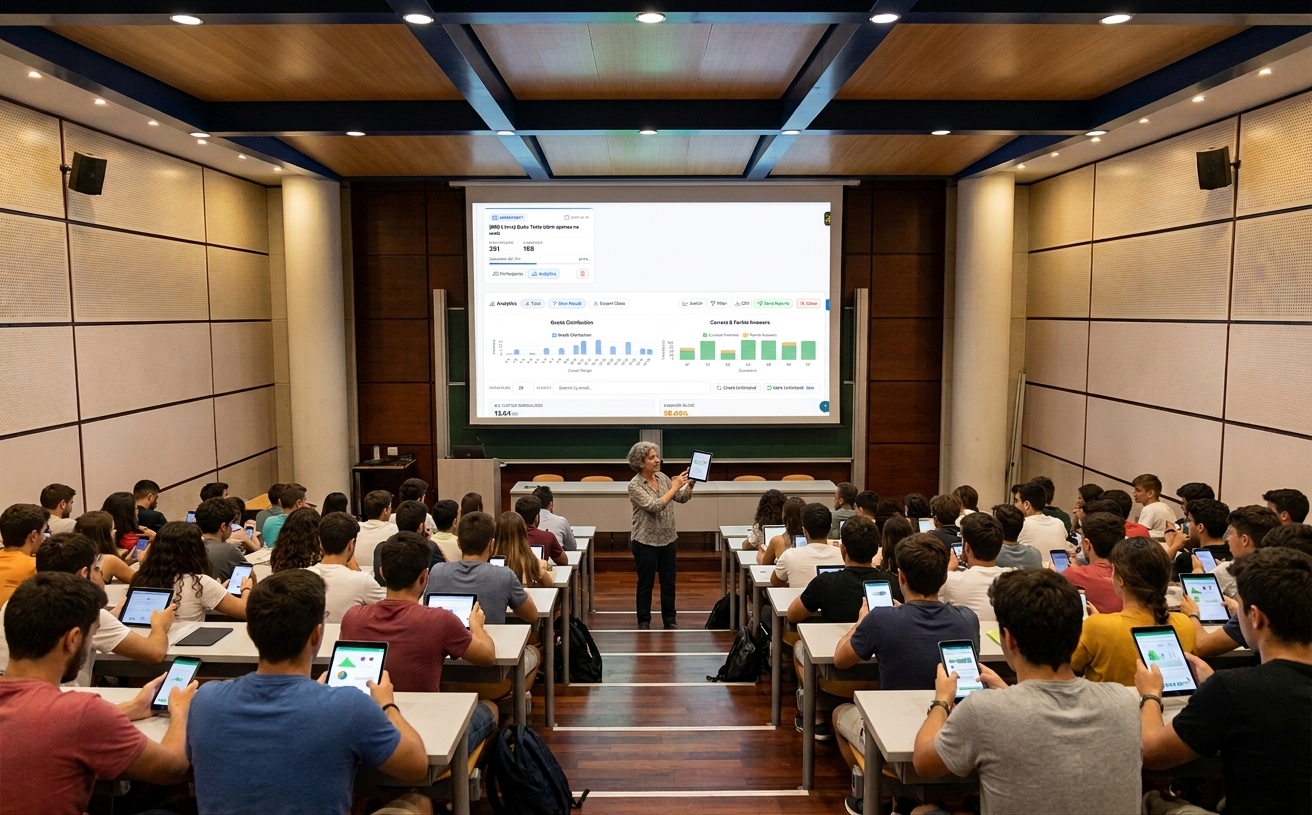
Instituto Superior Técnico integrated LearnLab into two second-year Physics courses for P4 2024/25. Seven weekly learning modules were distributed via direct links. Four graded assessments ran with automatic correction and instant results reports — deployed by the Departamento de Física as part of a Pedagogical Innovation Project.
Open-ended physics questions. ~0.2% error rate.
LearnLab graded open-ended Quantum Mechanics responses — derivations, multi-step calculations and free-text scientific explanations — against professor-calibrated rubrics, with LaTeX handled natively. 90% of IST students rated the automatic grading accurate or very accurate, and it measured 99.8% accurate against a human baseline.
Educators aren't waiting for institutional rollouts.
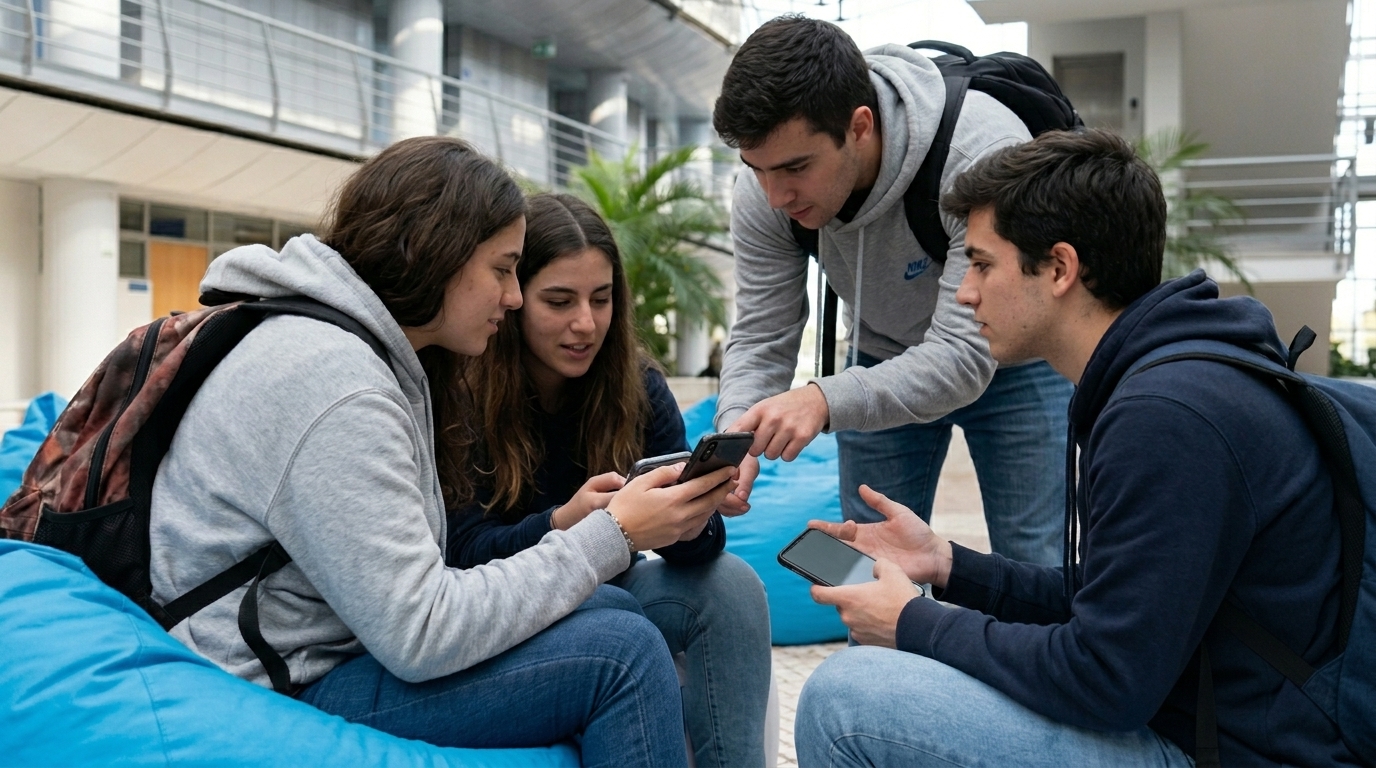
Across universities, government education bodies, and 1-on-1 tutoring schools — Singapore, the UAE, the UK, Portugal — individual lecturers and tutors sign up to LearnLab on their own initiative. No procurement cycles, no committees. They're embracing AI directly in their teaching practice, one course at a time, because the alternative is falling behind.
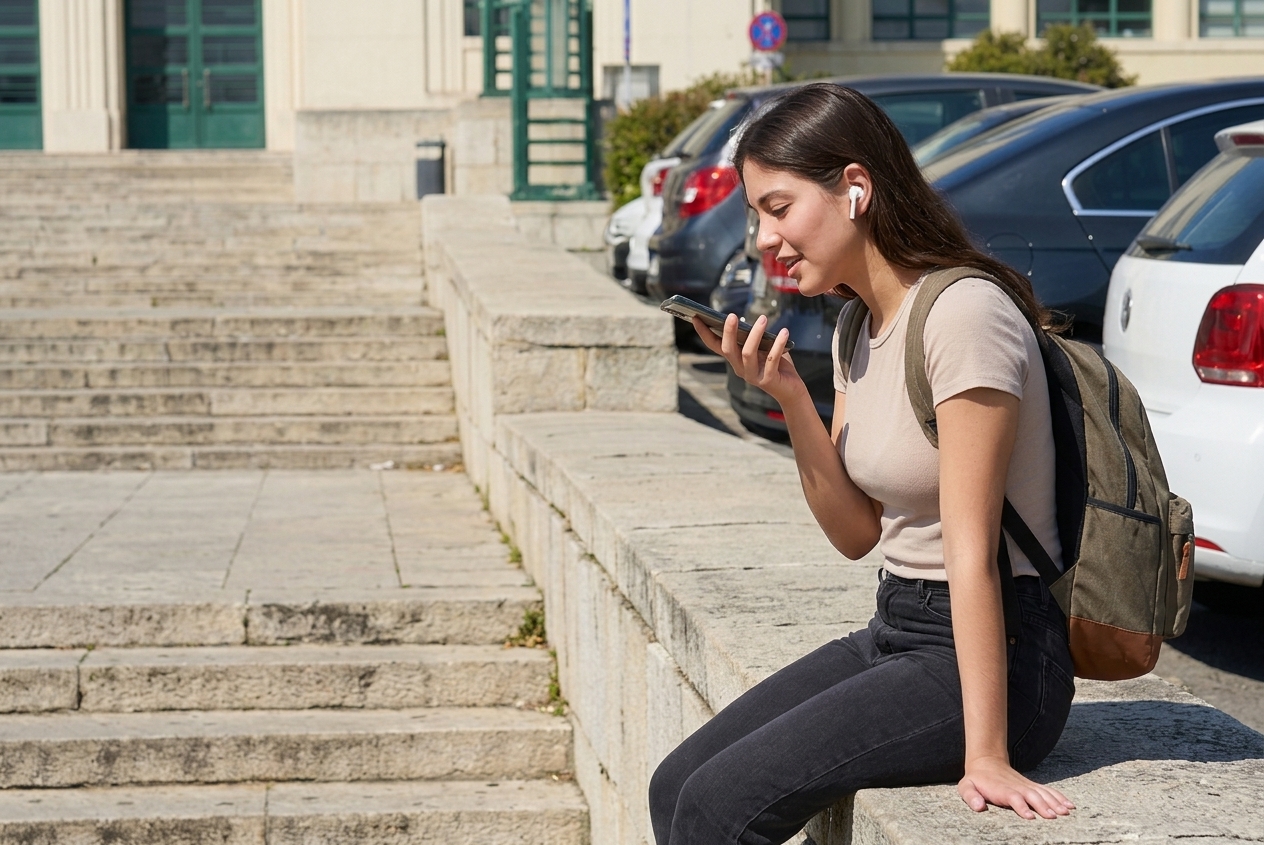
7 modules. One semester. Zero manual grading.
Instituto Superior Técnico integrated LearnLab into two second-year Physics courses for P4 2024/25. Seven weekly learning modules were distributed via direct links. Four graded assessments ran with automatic correction and instant results reports — deployed by the Departamento de Física as part of a Pedagogical Innovation Project.
Your week 6 slides, to a graded assessment, to your gradebook
Reconstructed from published university IT guides rather than vendor marketing. Only one takes you from your own slides to a graded, gradebook-ready result in a single session.
Built for the region's 2030 vision for education.
Ready to teach, not grade?
Course creation, assessment, AI grading and student analytics — in one loop.
Built for educators
Tested in real, graded university courses
In use across courses at Instituto Superior Técnico — physics, supply chain and operations management, and materials engineering, to name a few.
What educators ask about LearnLab